Location
Pacific Palisades, CACategory
HousesStatus
In DesignProject Type
New Construction/Fire Rebuild
Project Statistics
Main House
- Size3,779 SF
- Bedrooms4
- Bathrooms3.5
- Stories2
Accessory Dwelling Unit
- TypeDetached
- Bedrooms1
- Bathrooms1.5
- Size603 SF
Services
- Architecture
- Interior Design
Las Casas is a hillside family compound designed for a young family rebuilding after the recent Palisades fires. As part of Venn Studio’s ongoing involvement in fire rebuild efforts across Los Angeles, the project reflects a deeper commitment to helping families navigate the process of this new chapter.
In close collaboration with the homeowners, the design reimagines their property through the lens of resilience, drawing inspiration from the mid-century modern home that was lost while shaping a new vision for how the family will live moving forward.
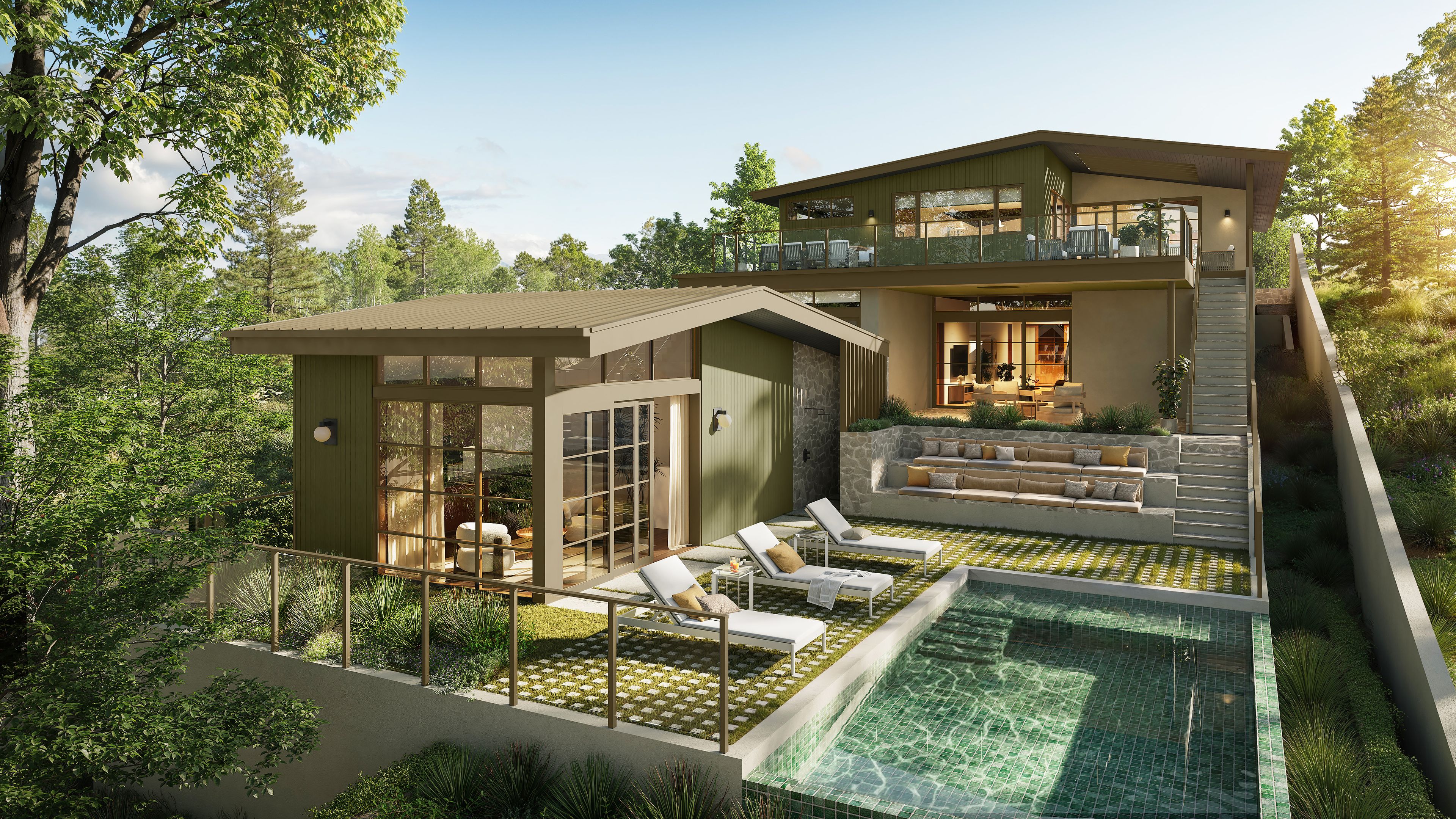
A new chapter for the property, where familiar ideas are carried forward in a way that feels more resilient, more intentional, and deeply tied to how the family lives today.
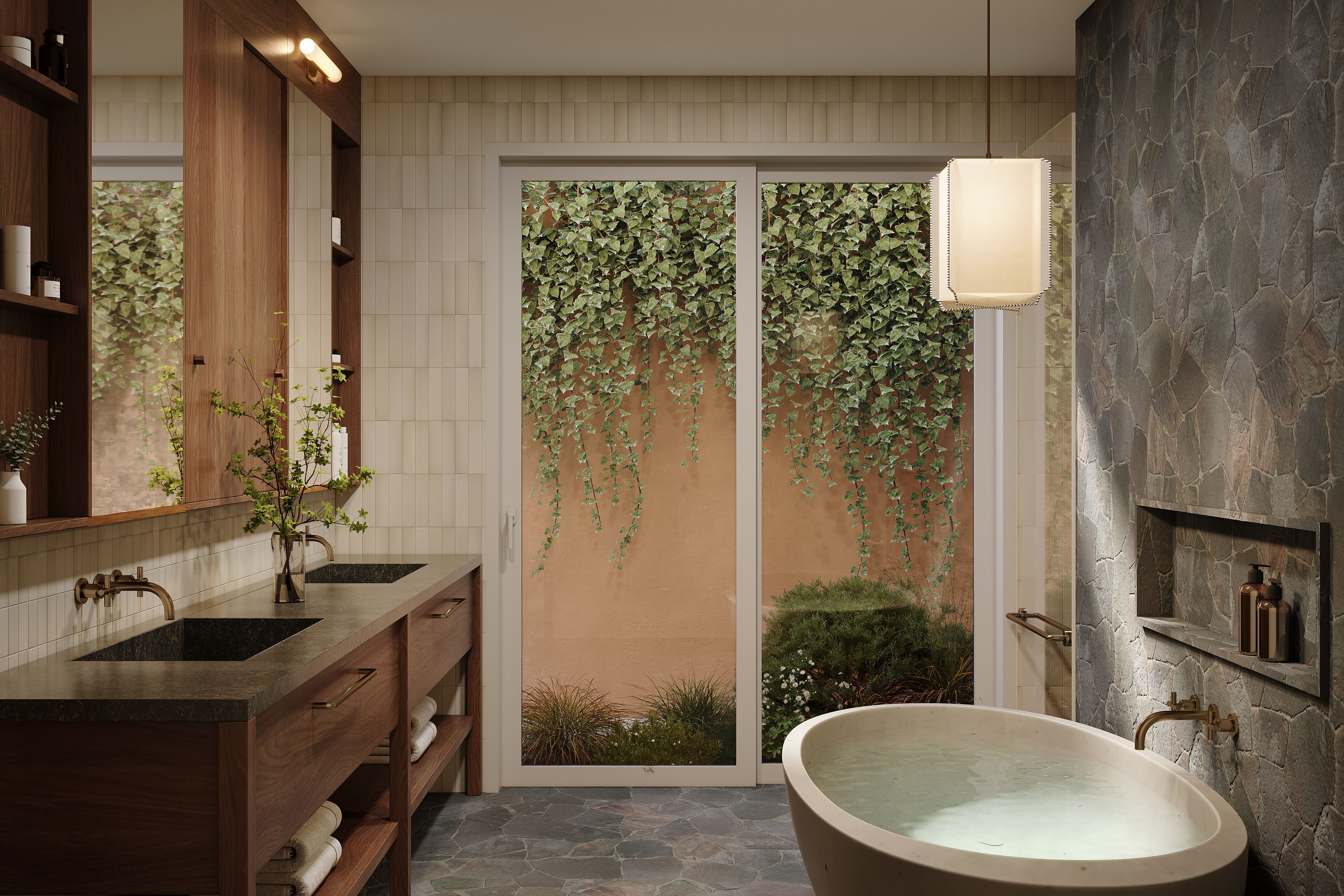
The project includes a new 2-story main residence, detached ADU, and a fully programmed outdoor environment that embraces California’s year-round climate. Furnished with built-in stone seating, grass paver walkways, and a reimagined pool area, the home unfolds through a series of multi-level decks and terraces that maximize the hillside setting and strengthen the relationship between architecture and landscape.
These spatial decisions are paired with a more deliberate approach to the construction, where the overall form and detailing are developed to support both performance and durability.
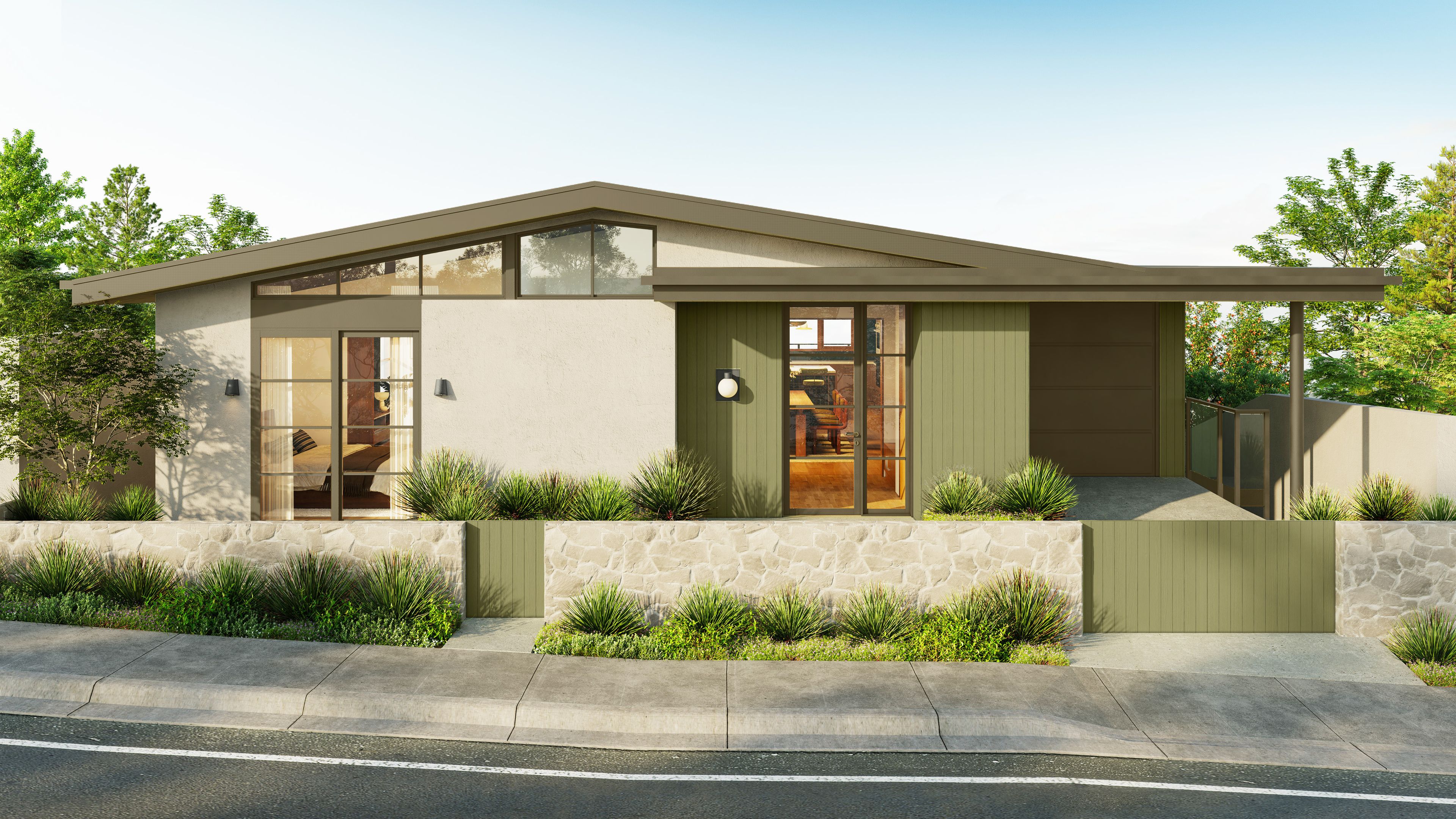
As part of Venn Studio’s ongoing work supporting fire rebuild efforts across Los Angeles, this project reflects a commitment to helping families rebuild with intention.
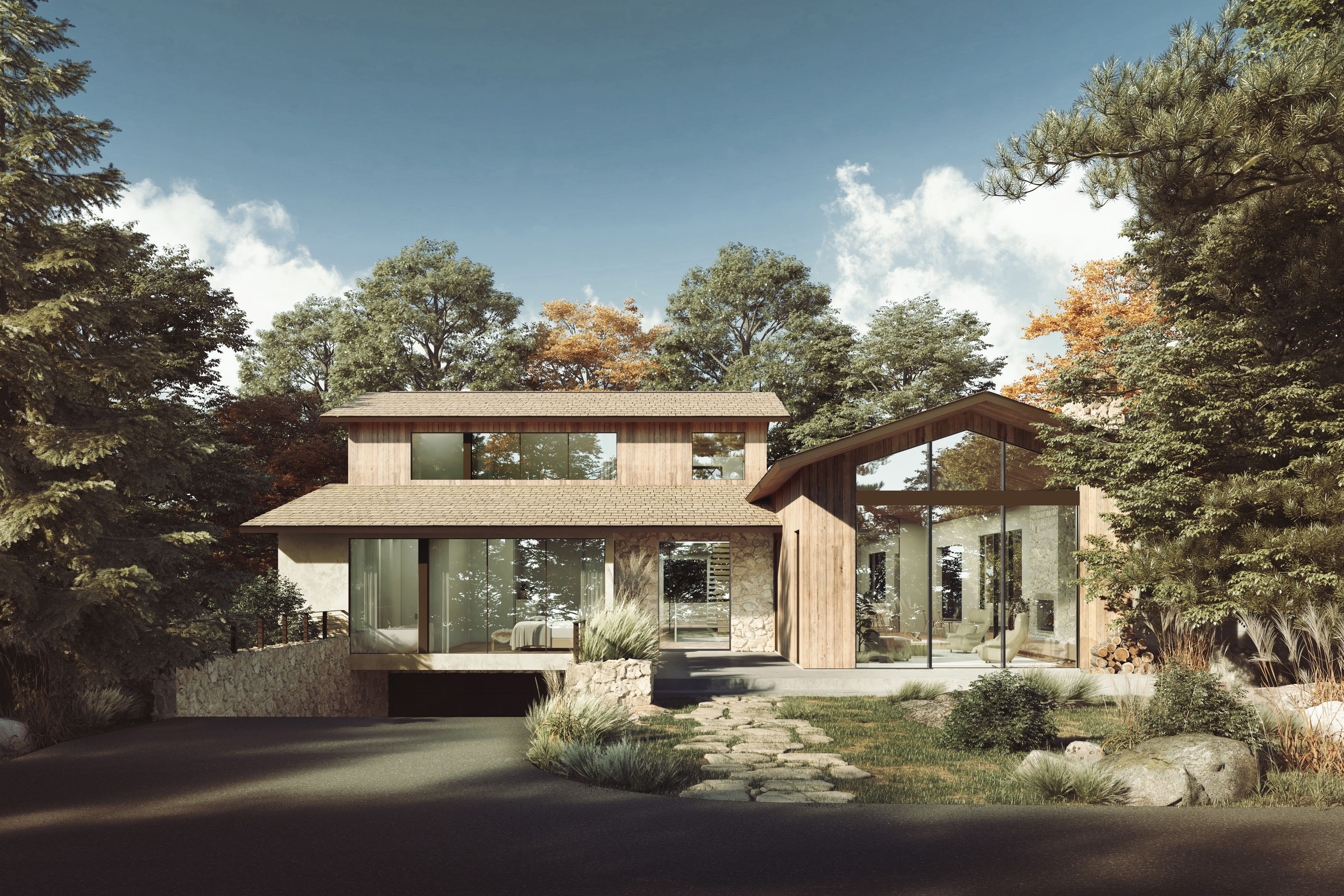
Material and detailing choices further reinforce that approach. A standing seam metal roof is paired with enclosed eave overhangs, ember-resistant venting, and protected gutter systems designed to limit debris accumulation over time. The exterior palette—composed of fire-resistant painted siding, stucco, and stone cladding—is selected not only for its durability, but for its ability to weather naturally within the landscape. Aluminum-clad windows and doors complete the system, balancing long-term performance with a refined, residential expression.
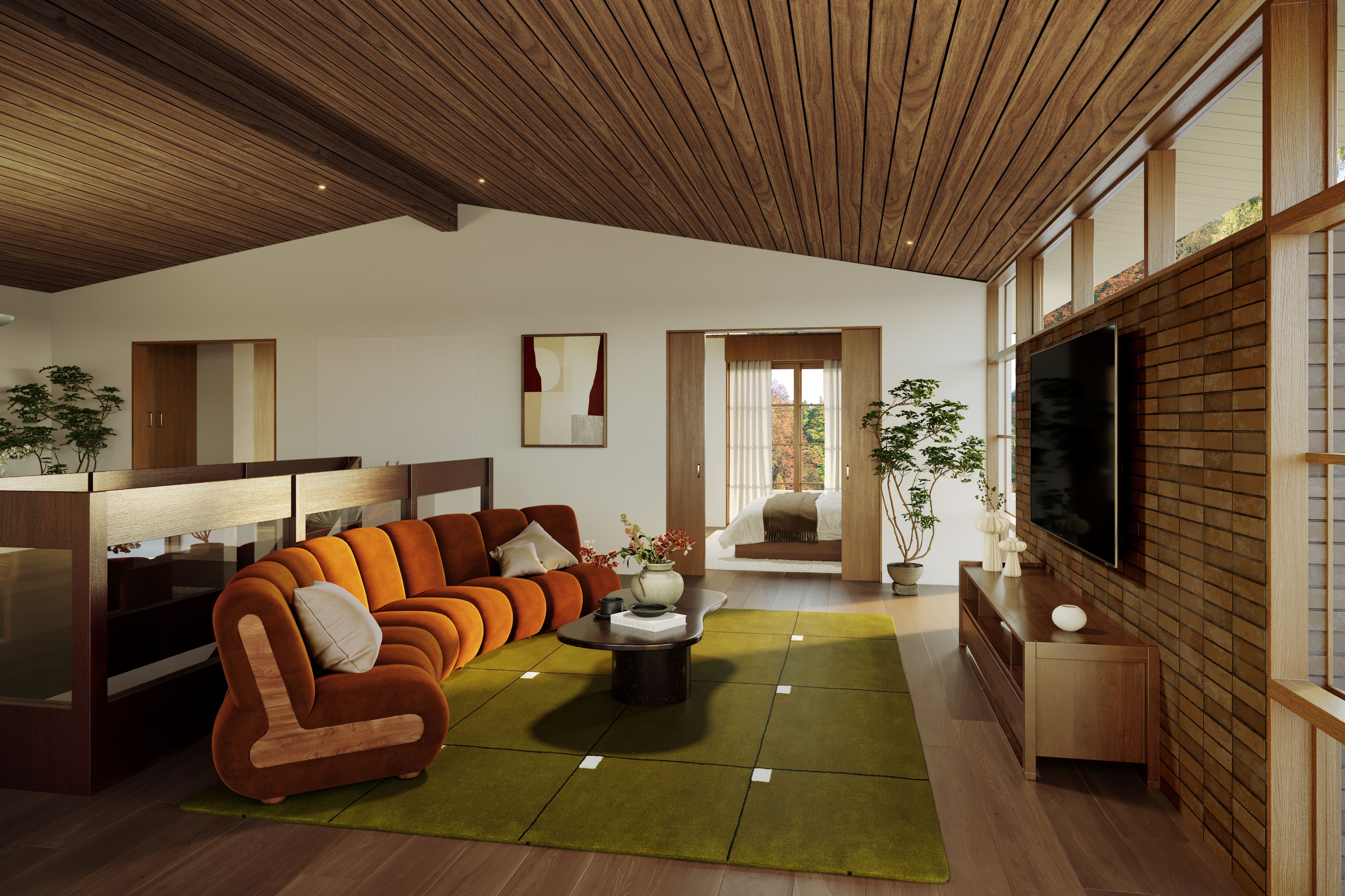
Stepping through the front entrance, the main floor houses the primary living and dining areas, organized around a central staircase. Natural oak finishes and shoji white painted walls define the interior, creating a warm and inviting presence when paired with ceiling-height windows that draw light through the length of the space.
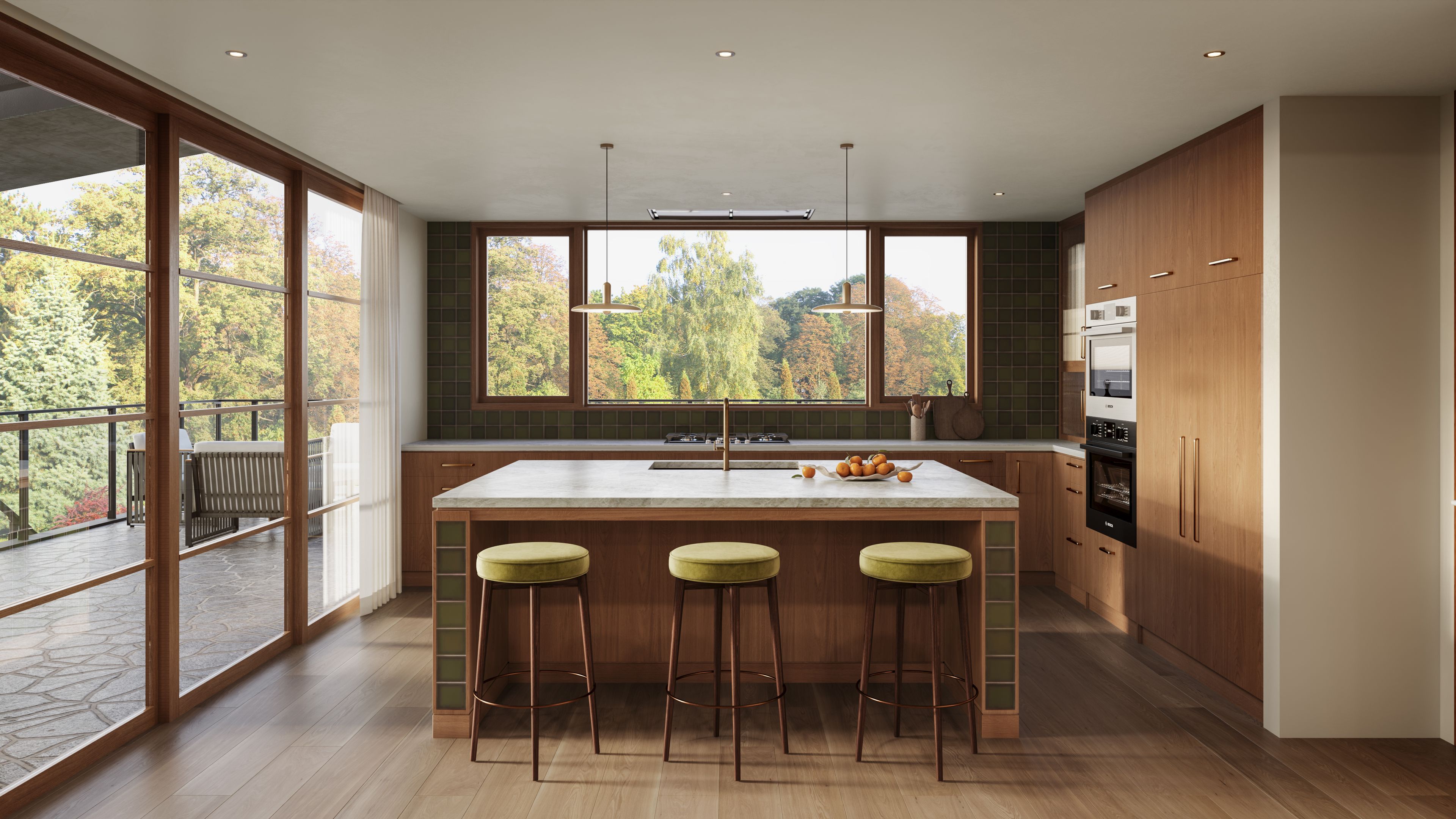
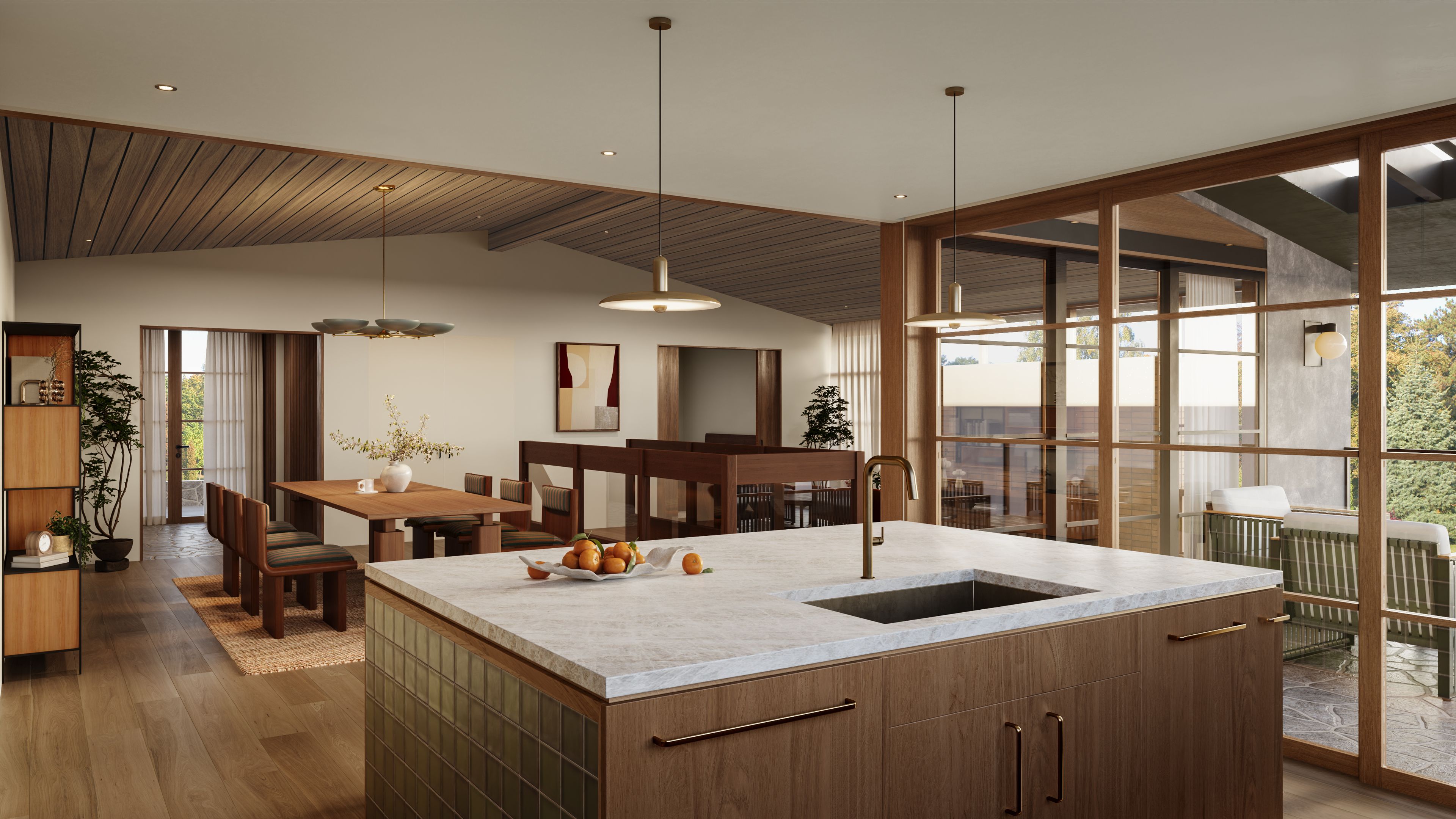
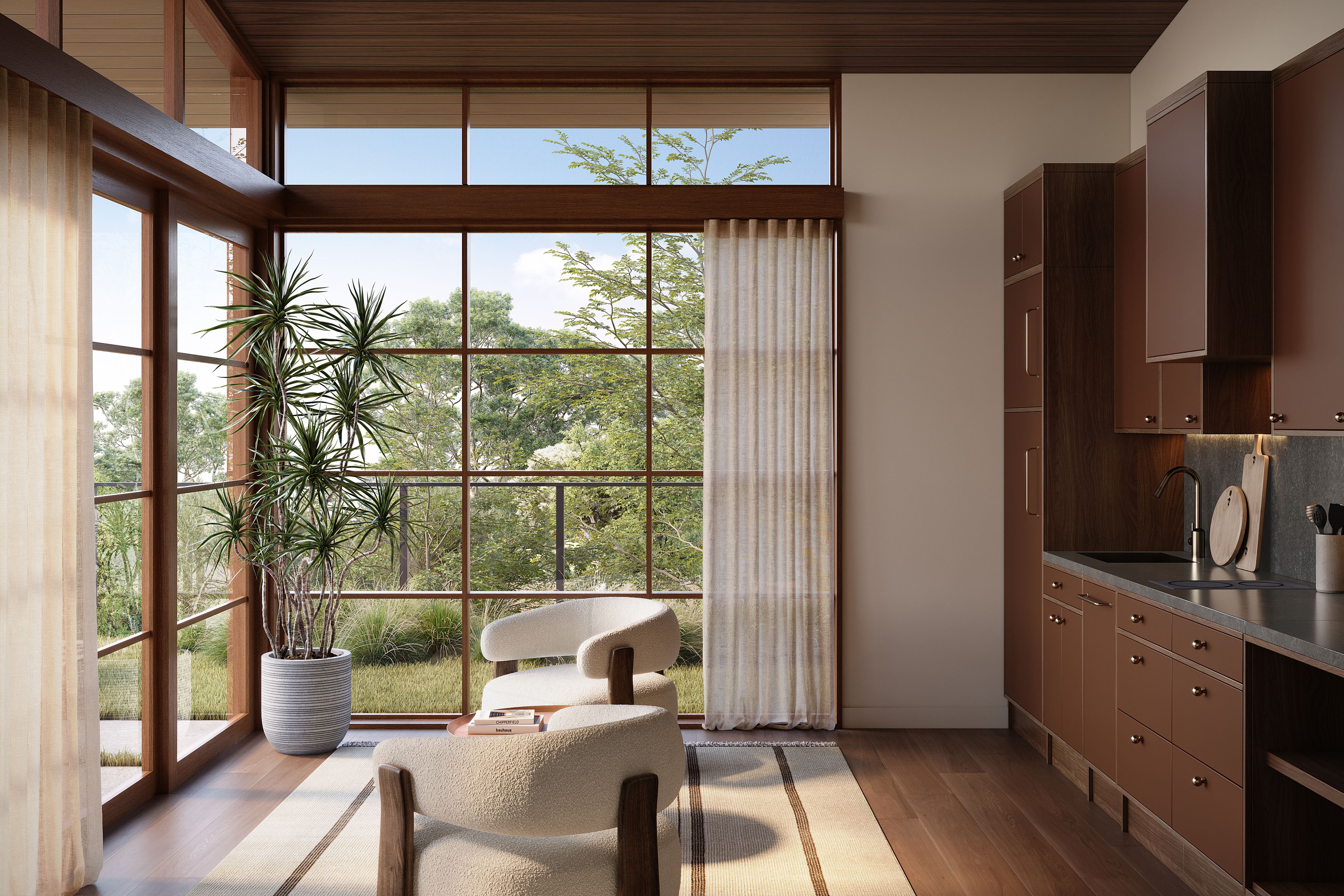
The kitchen is anchored by a Ceppo stone island and backsplash, paired with olive-toned tile and accented with bronze fixtures. Adjacent to the kitchen, an outdoor seating area extends the main living space outward, functioning as a balcony overlooking the terraced yard and ADU below, connected by a flagstone side stair.
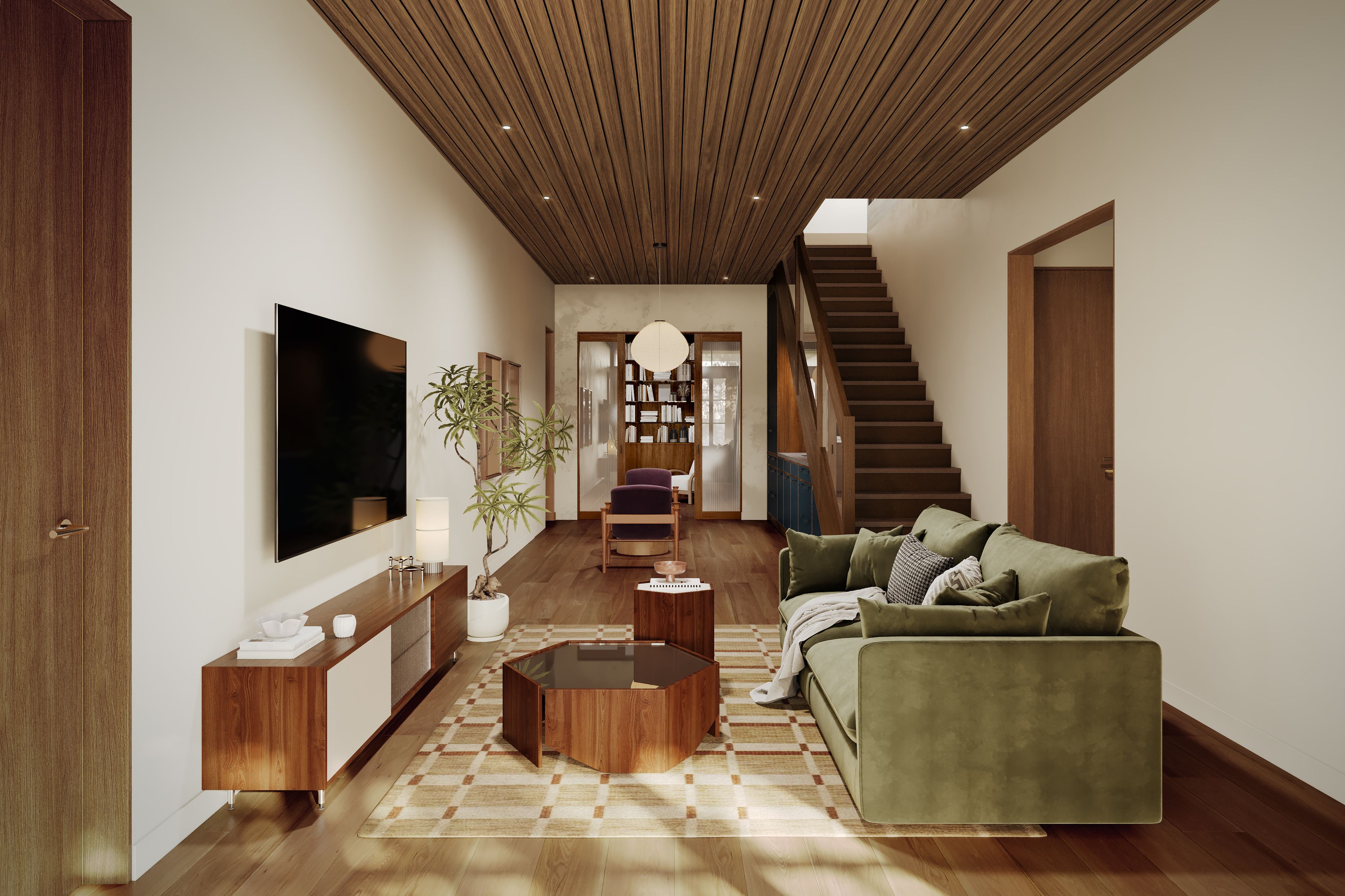
The lower level serves as a secondary gathering space centered around a family room with built-in wood shelving and integrated storage beneath the stair. A library and office area sit adjacent, enclosed by reeded-glass sliding doors that create a more quiet, focused environment when needed.
Guided by the character of the original residence, the project carries forward familiar elements such as low-sloped rooflines and a strong indoor-outdoor connection, while integrating fire-resistant strategies throughout. The intent is not to replicate what was there before, but to translate its spirit into a home that feels grounded in the present.