Multi-Generational
Living
The traditional single-family home is beginning to serve a different role than it did just a generation ago. Across the United States, more families are choosing to live under one roof as aging parents move closer to their children, adult children remain at home longer, and households look for new ways to share responsibilities and make better use of their property. What was once considered an uncommon living arrangement has become an increasingly practical response to the realities of modern life.
Nowhere is this shift more apparent than in California, where the demand for multi-generational homes continues to grow. The state is home to the five metropolitan areas with the highest share of multi-generational homes for sale, led by Los Angeles, where nearly 24% of home listings are marketed for multi-generational living. San Diego, San Jose, San Francisco, and Riverside round out the list, highlighting how deeply this trend has taken hold across the region.
While affordability is certainly one factor, it is far from the only one. Grandparents often want to remain active participants in family life while maintaining their independence. Parents are balancing careers, childcare, and the responsibilities of caring for aging family members. Adult children are launching careers later, saving for homeownership, or returning home during periods of transition. In a region as diverse as California, cultural traditions also continue to shape the way families live, with many households viewing multi-generational living not as a temporary solution, but as a long-standing way of supporting one another. As more families embrace this way of living, the conversation extends beyond who shares the home to how the home itself should respond.
THREE PRINCIPLES OF MULTI-GENERATIONAL DESIGN
FLEXIBILITY
Different members of the household often follow entirely different daily routines, whether it's grandparents waking early, parents working from home, young children napping, or adult children coming and going throughout the day. A well-designed home allows these routines to exist comfortably alongside one another through thoughtful circulation, acoustic separation, accessibility, and carefully considered relationships between shared and private spaces. Rather than asking every family member to adapt to the house, the architecture should adapt to the rhythms of the family.
ADAPTABILITY
Families naturally evolve over time, and the home should be designed with that evolution in mind. Rooms that serve one purpose today may need to support an entirely different use years from now. A flexible office may become a nursery, a guest room may later accommodate aging parents, or a shared living space may need to become more private as children grow older.
PRIVACY
While togetherness is often the goal of a multi-generational home, privacy is equally important to its success. Providing each generation with opportunities for retreat allows shared spaces to feel more comfortable and intentional when family members do come together. This balance can be achieved through thoughtful planning of bedrooms, sound separation, independent entrances, or secondary living spaces. Privacy is not about creating distance between family members, but about giving everyone a place that feels distinctly their own.
PLANNING FOR SHARED LIVING
The most memorable moments in a home are rarely planned. They happen while someone prepares dinner, children finish homework nearby, grandparents enjoy a quiet morning coffee, or family members gather on the patio at the end of the day. Rather than expecting everyone to come together in one place, successful multi-generational homes create opportunities for these everyday interactions to occur naturally.
Shared spaces such as kitchens, dining areas, living rooms, and outdoor gathering spaces become the places where the rhythms of daily life overlap. Thoughtful planning allows these spaces to feel connected while still supporting different activities at the same time. Someone cooking in the kitchen can remain part of a conversation happening in the living room, while others move easily between the house and outdoor spaces. The goal is to create an environment where connection feels effortless and each space contributes to the life of the home.
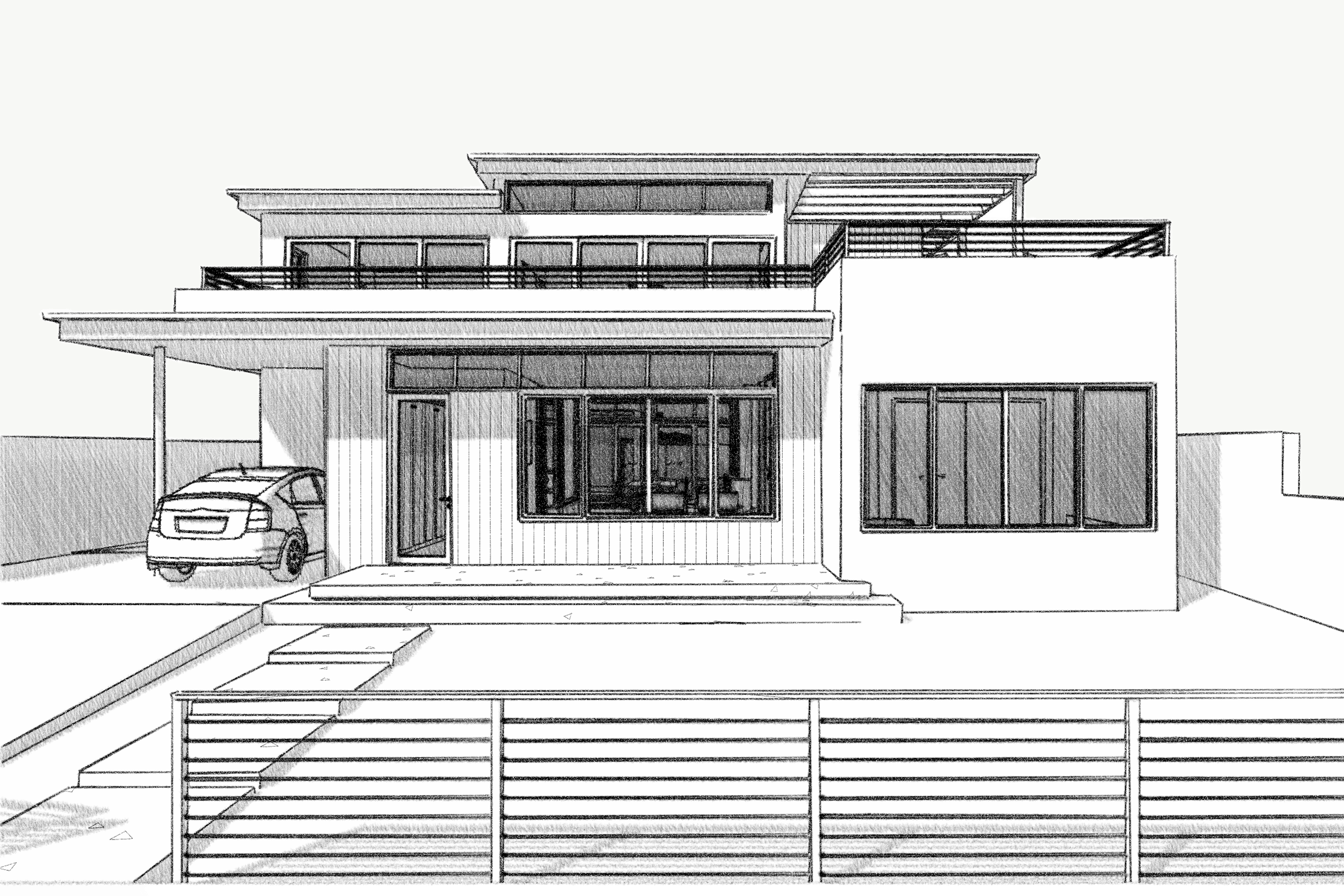
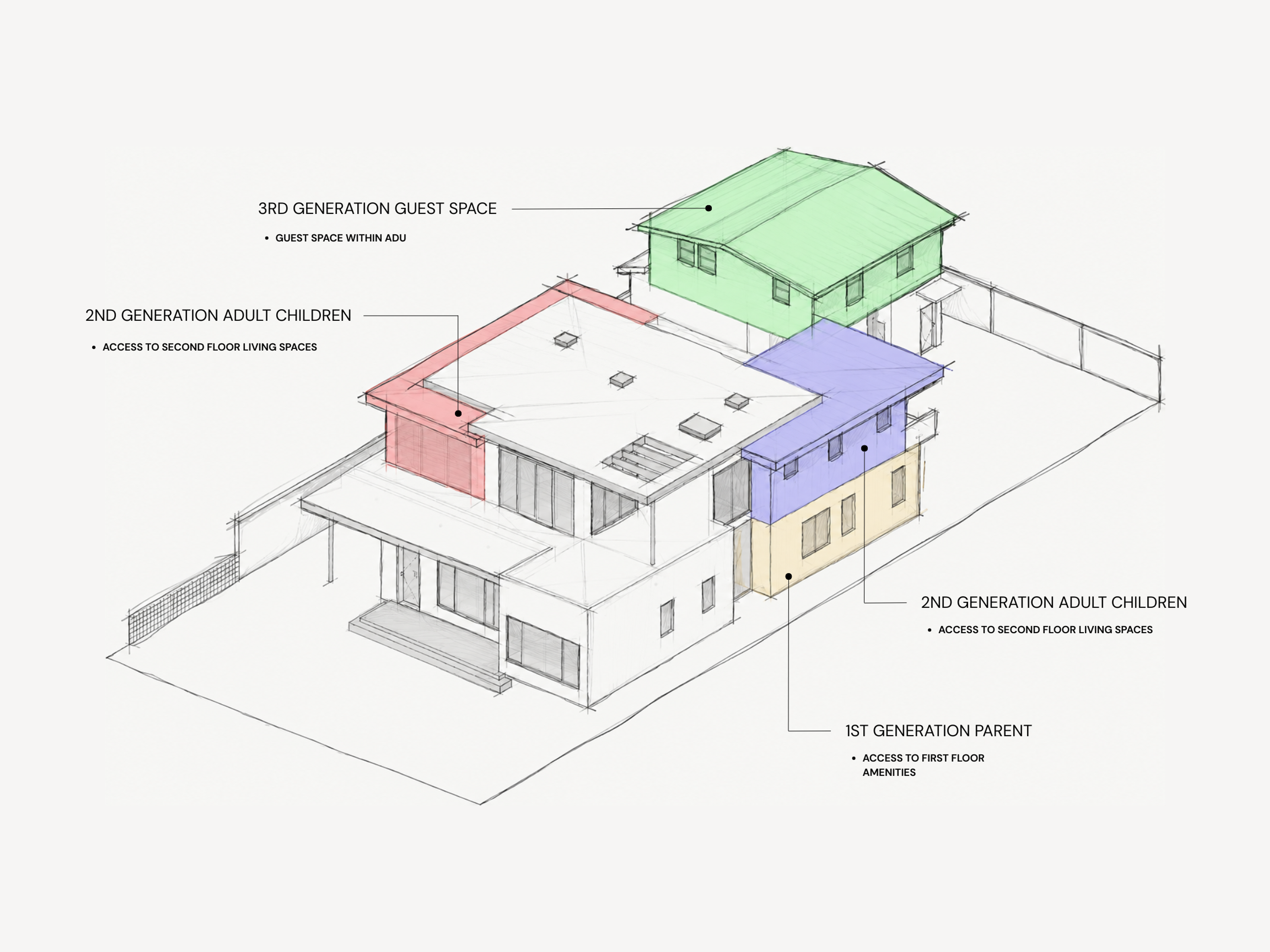
At the Coolidge Residence, this philosophy informed several key design decisions. The first floor brings together the kitchen, dining, and living spaces alongside the primary suite, allowing the home to function comfortably for aging in place. Upstairs, additional bedrooms, a secondary primary suite, and a separate living area provide flexibility for extended family, adult children, or long-term guests. Acoustic separation between the two levels enhances privacy, while each floor opens directly to outdoor spaces and natural light, creating independent living environments that remain connected through a shared sense of home.
DESIGNING FOR EVERYDAY LIFE
Designing for multiple generations is ultimately about more than creating additional space. It is about understanding how families live together, how those relationships change over time, and how architecture can quietly support those moments without drawing attention to itself.
There is no universal solution for a multi-generational home because no two families are the same. The most successful homes are those that respond thoughtfully to the people who inhabit them, creating spaces that remain functional, adaptable, and meaningful for years to come.
Whether you're renovating an existing home or planning a new one, thoughtful design begins with understanding how your family lives. If you're exploring a multi-generational home, we'd love to hear about your project. Visit our project inquiry page here