Fire
Resilient Design
In the wake of recent Los Angeles wildfires across areas including the Pacific Palisades, Malibu, Altadena, Pasadena, and Tarzana, fire rebuilding across Southern California has taken on a different weight. For many homeowners, rebuilding is no longer about replacement, but about rethinking how a home engages with risk from the outset.
At the Las Casas Residence, this shift is approached not as a checklist, but as a series of design decisions. Each one shapes how the home performs within a fire-prone hillside context.
For those looking to better understand wildfire risk and current building requirements in California, the resources below provide a useful overview of fire hazard severity zones and applicable building standards:
California Department of Forestry and Fire Protection
LA County Recovers - Resilient Rebuilding
For those navigating a rebuild, our project inquiry page here outlines our process and the initial steps for beginning a conversation.
Designing from the Site Up
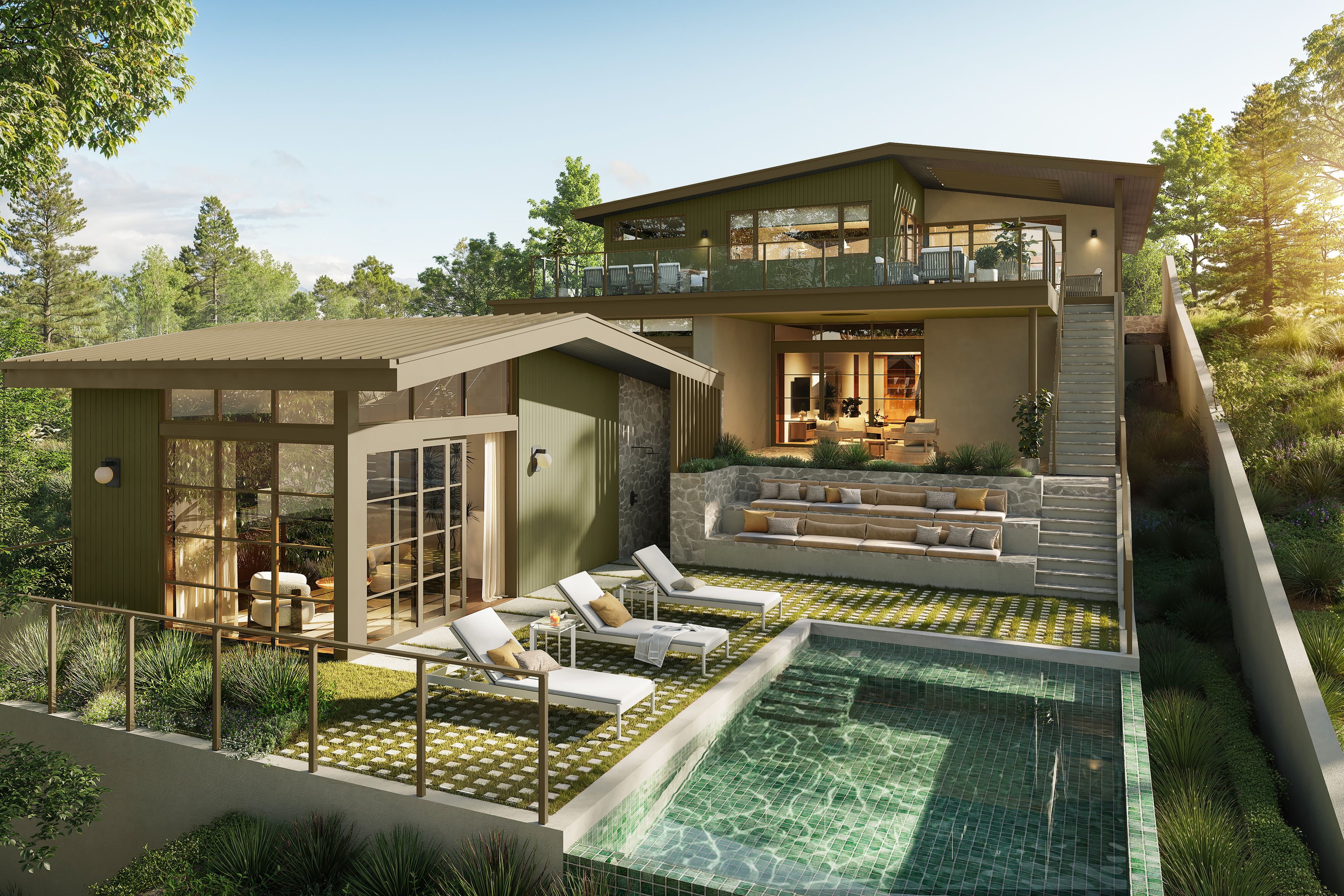
Located in Pacific Palisades within a designated Very High Fire Hazard Severity Zone, Las Casas sits on a hillside lot defined by exposure, slope, and prevailing wind patterns. The previous home on the property was completely lost in the 2025 fires, making this fire rebuild an opportunity to reconsider how the house is placed within the landscape.
Rather than treating the site as a backdrop, the design uses it as a framework. The home extends into the lot through a series of terraces that step with the natural grade, organizing outdoor space while creating more controlled transitions between built form and surrounding conditions. A new pool anchors the lower level, reinforcing this relationship between topography and occupation.
These moves are spatial, but they also begin to shape how the home performs. They reduce abrupt edges and create a more intentional interface between architecture and landscape.
Resolving the Exterior Through Detail
Many of the most consequential fire-resilient decisions at Las Casas occur at the level of the exterior. These are often subtle moves, but they have a lasting impact on performance over time.
The roof is a primary example. The design combines low-pitched and flat roof forms, drawing from mid-century precedents while establishing a clear architectural identity. At the same time, these transitions require careful resolution, as roof junctions are among the most vulnerable points during ember exposure.
A standing seam metal roof is paired with enclosed eave overhangs and ember-resistant venting, limiting opportunities for intrusion while maintaining necessary airflow. The decision to reduce reliance on vented attic spaces through a fully insulated roof assembly further simplifies these conditions and minimizes concealed areas where heat and embers can accumulate.
Material selection at the exterior is approached with similar intent. Stucco, stone, and fire-resistant siding are used not only for their performance, but for how they weather and hold up over time in an exposed environment. Aluminum-clad windows and doors provide a more durable interface at openings while maintaining the clarity and proportion of the overall design.
Even with these measures in place, long-term performance is tied to upkeep. Roofs and gutters that accumulate debris or dry vegetation can undermine otherwise resilient systems, reinforcing the importance of ongoing maintenance as part of the overall strategy.
Openings are treated with similar consideration. Windows track closely with the roof lines across both the main residence and ADU, reinforcing the geometry of the design while requiring more robust glazing strategies to resist heat and impact.
Individually, these decisions are subtle. Together, they establish a more continuous and controlled exterior condition.
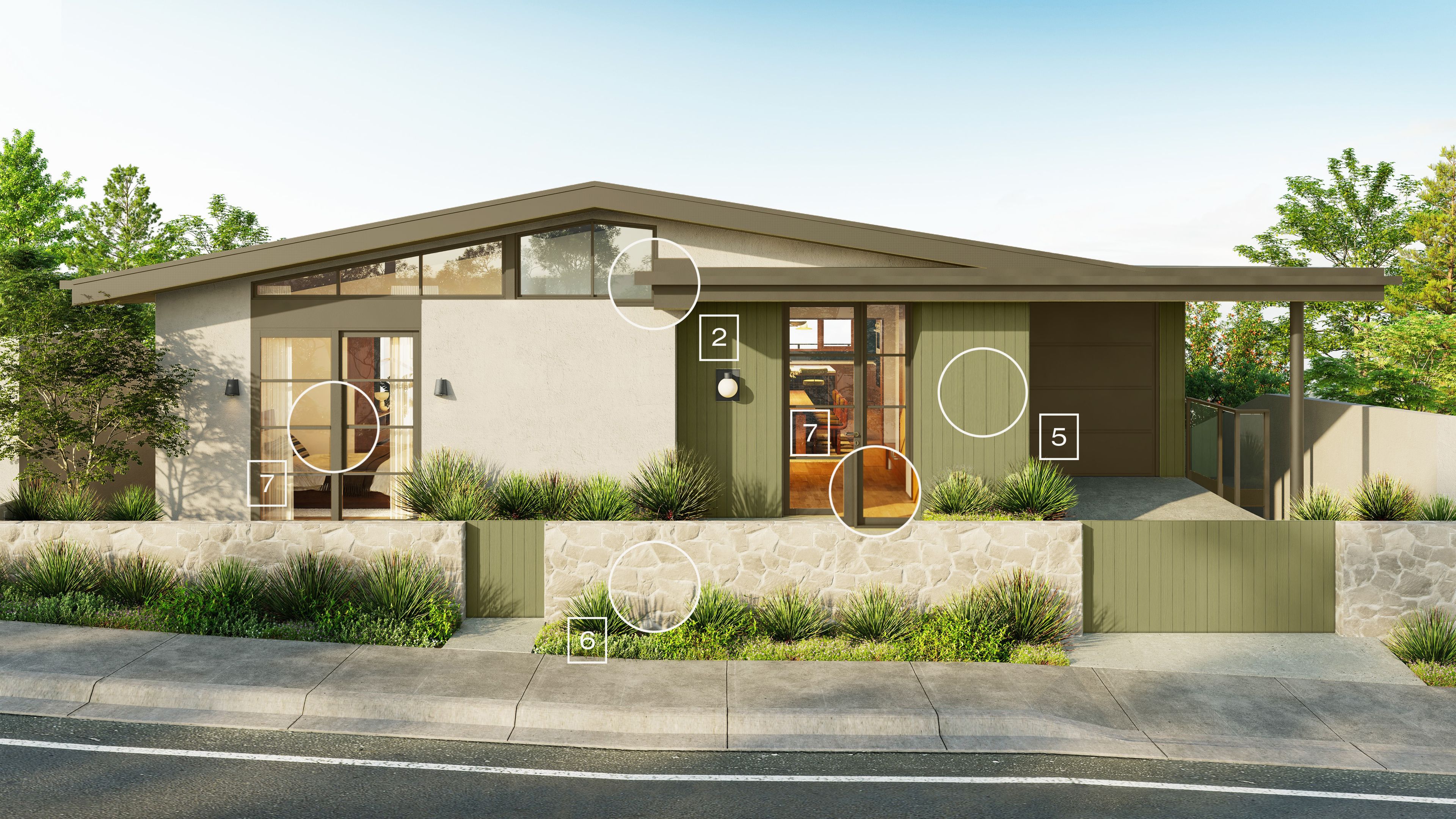
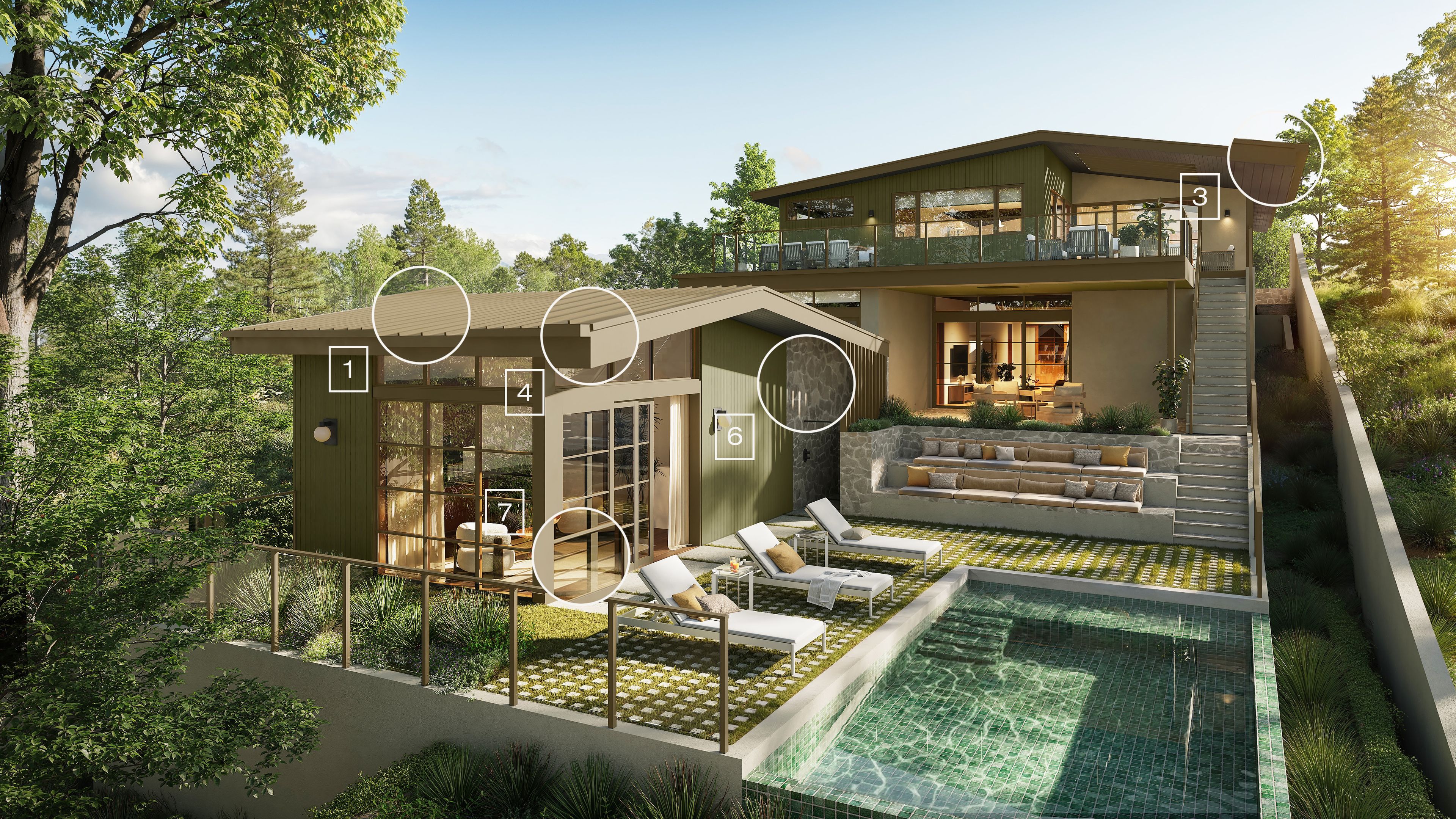
Key Fire-Resilient Design Measures at Las Casas
While many of the project’s decisions are embedded within the overall design, several key measures directly address fire exposure at the level of construction and detailing:
Metal Roof Assembly
A standing seam metal roof is used to reduce ignition risk from wind-driven embers, which most commonly accumulate at the uppermost surfaces of the home.
Ember-Resistant Roof and Eave Venting
Roof and soffit vents are detailed with ember-resistant screening, allowing for ventilation while limiting intrusion into concealed spaces.
Enclosed Roof Eave Overhangs
Eaves are fully enclosed to reduce exposed cavities at the roof edge, which is one of the more vulnerable conditions in wildfire scenarios.
Protected Gutter Systems
Gutters are fitted with leaf and debris screens to reduce buildup of dry vegetation and minimize ignition risk at the roof perimeter.
Fire-Resistant Painted Siding
Exterior siding is selected for its ignition resistance while maintaining a clean, consistent surface expression across the home.
Exterior Stone Cladding
Stone is used at key portions of the exterior to introduce a more durable, non-combustible material layer while grounding the architecture within the landscape.
Aluminum-Clad Windows and Doors
Window and door systems are specified with aluminum cladding to improve durability and reduce vulnerability at openings, while preserving the proportions and clarity of the design.
A Coordinated System
These measures are not applied independently. Each decision reinforces the next, creating a more continuous exterior condition that is better equipped to perform over time.
Balancing Design Intent and Fire Performance
One of the more consistent challenges in fire rebuilding is navigating the tension between what supports architectural intent and what performs best under fire conditions.
At Las Casas, the design draws from mid-century modern principles. These include low-sloped rooflines, strong horizontality, and a close relationship between interior and exterior space. Many of these qualities rely on openness, thin profiles, and expressive material transitions. In some cases, these moves can conflict with more defensive or utilitarian approaches to construction.
Rather than defaulting to one over the other, the project works within that tension. Materials such as stucco, stone, and fire-resistant siding are selected not only for their performance, but for their ability to maintain warmth and continuity with the surrounding landscape. Roof forms remain integral to the architectural language, while their detailing is adapted to address vulnerability at edges and transitions.
The result is not a compromise. It is a recalibration, where performance is embedded within the design rather than applied to it.
A More Specific Approach to Rebuilding
Rebuilding after a wildfire in Los Angeles, whether in the Pacific Palisades, Malibu, Altadena, Pasadena, or Tarzana, requires a more deliberate approach than in the past.
At Las Casas, resilience is not treated as a separate layer. It is embedded within the organization of the home, from how it meets the ground to how its edges are detailed. The project reflects a broader shift in how fire rebuilding is approached. It is less about response and more about designing homes that are better aligned with their environment over time.